



About the Blog Authors
Isaac Overcast is a Research Assistant Professor at the University of Maine. He is co-developer of ipyrad (a popular RADSeq assembly and analysis tool), and part of his scientific practice involves providing training opportunities to develop computational expertise in the next generation of biodiversity scientists. More info is available on his professional website.
Natalia J. Bayona Vásquez is an Associate Professor at Emory University. She is a co-developer of 2RAD/3RAD (a popular RADSeq library prep protocol) and a teacher-scholar who uses research in molecular ecology to incentivize critical inquiry in the classroom and laboratory.
The full RADCamp organizing committee included Deren Eaton, Erika Magallón Gayón, Sandra Hoffberg, Todd Pierson, Silvia Hinojosa Álvarez, Jesús Hernández Pérez, and Andrea Félix Ceniceros. More information can be found on the RADCamp home page.
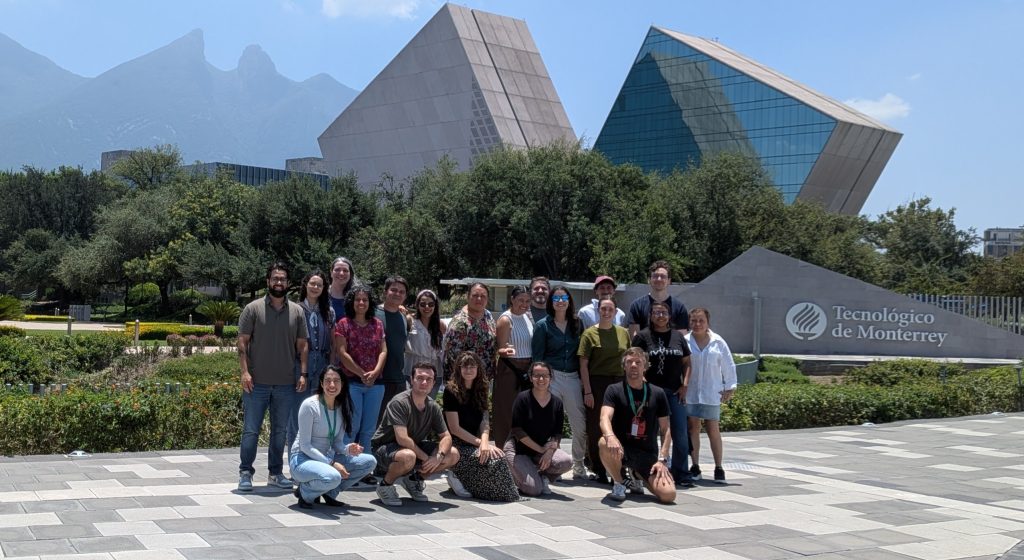
In July 2026, the RADCamp organizing committee, in association with CoreLab Genomics at Tecnológico de Monterrey, convened a biodiversity wet-lab data generation and dry-lab analysis workshop for Latin American researchers in Monterrey, Mexico. The workshop aimed to train participants in contemporary DNA library prep and sequencing lab work and bioinformatics techniques. We welcomed 16 participants from Argentina, Brazil, México, Uruguay, and Paraguay (5 male- and 11 female-identified). The participant pool included a broad range of career stages: four faculty/professors, one early-career scientist, one research fellow, five postdocs, one lab technician/manager, three PhD students, and one master’s student. Study organisms investigated during the workshop were similarly diverse, including economically and culturally relevant trees (quebracho and cacao), several birds (raptors, flamingos, screech-owls), mushrooms and fungi, bottlenose dolphins, paradoxical frogs, vesper mice, cichlid fish, ants, and spiders (including tarantulas).
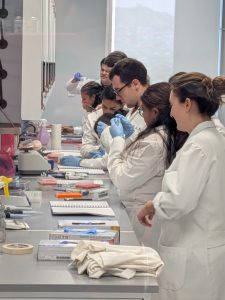
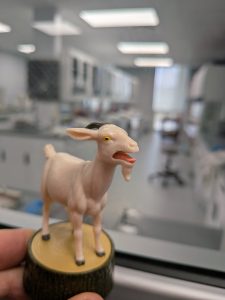
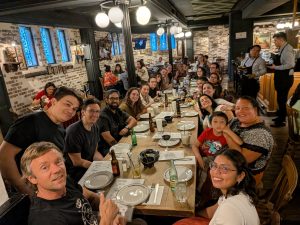
Over the 8 days of the workshop, organizers and participants navigated wet- and dry-lab work, collaborated in troubleshooting and overcoming typical and novel challenges, and developed strong personal and professional bonds that will carry forward into our future research careers. “The Screaming Goat” (a toy goat that screamed at the press of a button) became a core member of our team and also (eventually) the official workshop mascot, giving everyone a nice opportunity to laugh when a laboratory procedure did not work out or when a bioinformatics analysis crashed. We held a mid-workshop networking and decompression activity at a local bowling alley where fun was the ultimate goal (none of us were particularly skilled). On the final day, we held a research symposium where all participants presented their study organisms, research questions, and results from the workshop. This was a fantastically interesting and gratifying conclusion to a long week and a half of intensive learning, discussion, and bonding.
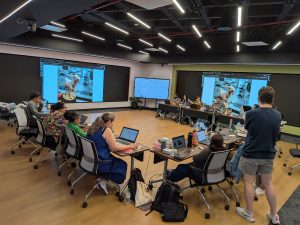
The workshop aimed to provide much-needed training in high-throughput library prep and bioinformatics methods, specifically for colleagues from Latin American countries. Given limited funding for scientific research throughout Latin America, an additional goal of this workshop was to raise sufficient funds to offset participant support costs for lab materials, sequencing, travel, and lodging. We are happy to report that the workshop was an outstanding success through a huge effort from everyone involved, from organizers to support staff to participants to numerous administrators and sales reps, and through outstanding financial contributions from numerous societies, most notably the American Genetic Association through a Special Event Award.