




Meet the bloggers: Mitchel Daniel is a postdoctoral fellow at Florida State University. He is an evolutionary and behavioral ecologist, and is especially interested in sexual selection, kin selection, and kin recognition. Follow Mitchel’s work @MitchelJDaniel. Walid Mawass is an evolutionary geneticist, currently a PhD candidate at the Université du Québec à Trois-Rivières, […]
Category: Journal of Heredity
A devilishly good example of bridging the conservation genetics gap
About the author: Dr Helen Taylor is a conservation geneticist who studied for her PhD in New Zealand, working on inbreeding in little spotted kiwi. She went on to undertake postdoctoral research on inbreeding and male fertility in passerines and, at that point, became interested in the integration of genetics into conservation management. After eight […]
Hybrid detection in a sea turtle hybridization hotspot in Brazil
About the author: Alexandra DeCandia is a postdoctoral fellow at Smithsonian’s National Zoo and Conservation Biology Institute. Her research applies diverse molecular techniques to wildlife conservation and disease management of North American mammals. Alexandra received her Ph.D. from Princeton University in 2020 and her B.A. from Columbia University in 2015. For her career, she strives […]
This is their year! 2020 findings shed new light on sex chromosome evolution in skinks and their close relatives
Brendan J. Pinto (he/him) received a PhD in August (2020) in the Gamble Lab. Currently he is a research associate of zoology at the Milwaukee Public Museum and a postdoctoral research fellow at the University of Texas at Austin in the Kirkpatrick Lab where they aim, among many other things, to disentangle the selective forces […]
Gene-culture coevolution in humpback whales
Aisha O’ Connor wrote this post as part of Dr. Stacy Krueger-Hadfield’s Principles of Scientific Investigation course at the University of Alabama at Birmingham. Aisha is a non-thesis Masters student in the Krueger-Hadfield lab, and is interested in marine conservation and sustainable management of marine resources. Aisha tweets @Aisha_MOC. Imagine swimming 1000’s of […]
Nature versus nurture: estimating heritability of deer antlers and body size
Aaron Shafer is an Assistant Professor at Trent University, Canada. Their research uses genomic and bioinformatics tools to characterize adaptive and demographic processes in natural populations. Research organisms in the lab currently include shrews, deer, caribou and mountain goats. Lead-author Aidan Jamieson was an honours biology student who is now doing a MSc at York […]
What role do pedigrees play in the preservation of the Galapagos giant tortoise?
About the author: Angie Bradley wrote this post as part of Dr. Stacy Krueger-Hadfield‘s Principles of Scientific Investigation course. Angie is a student in the Accelerated Bachelor’s/Master’s of Biology Program at UAB. In her time at university, Angie has become passionate about genetics, aging, and molecular biology. She hopes to one day attend dental school and […]
Habitat Fragmentation of the Catfish Hemibagrus spilopterus: Dammed If We Do
About the author: Rose Ferguson wrote this post as part of Dr. Stacy Krueger-Hadfield‘s Principles of Scientific Investigation course. She is currently a dual Bachelor’s and Master’s student through the Accelerated Bachelor’s to Master’s program at UAB. She is planning on conducting research in Dr. Dustin Kemp’s lab beginning spring of 2021. With COVID-19 safety […]
Swiss army knife genetics: Does pleiotropy do all the adaptation job in Mimulus guttatus?
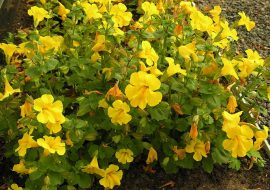
It is not a simple task to adapt to a new environment. An organism needs to acclimate itself to multiple new conditions, from differences in climate to novel parasites and predators awaiting for a newcomer. Such adaptive multitasking might take a long time to form at the genetic level and as a consequence delay the […]
Mind the gap: why is genetics often missing from conservation?

In this series, written specially for the AGA blog, Dr Taylor will be exploring the gap between conservation genetics research and conservation implementation, showcasing some examples of how the gap is being closed for various species and projects, and exploring what it means to be a conservation geneticist in the modern sense (aka, why at […]