




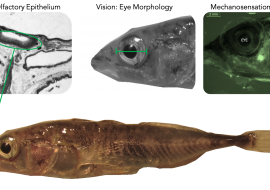
The ability of organisms to colonize or adapt to new and changing environments is of critical interest in biology, especially considering the threats and advances of human-induced environmental change. Certain traits may play a key role in determining population persistence or decline in the face of climate change, habitat fragmentation, and the like. In the […]
Category: Science Communication
Swiss army knife genetics: Does pleiotropy do all the adaptation job in Mimulus guttatus?

It is not a simple task to adapt to a new environment. An organism needs to acclimate itself to multiple new conditions, from differences in climate to novel parasites and predators awaiting for a newcomer. Such adaptive multitasking might take a long time to form at the genetic level and as a consequence delay the […]
Mind the gap: why is genetics often missing from conservation?

In this series, written specially for the AGA blog, Dr Taylor will be exploring the gap between conservation genetics research and conservation implementation, showcasing some examples of how the gap is being closed for various species and projects, and exploring what it means to be a conservation geneticist in the modern sense (aka, why at […]
An ode to the mudosphere
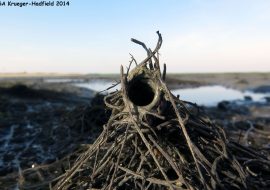
Field work has been cancelled the world over due to COVID-19. Over at The Molecular Ecologist, the contributors curated some photos from our exploits in the field as a nostalgic post to life pre-lockdown (if you have photos, be sure to send them to TMEfieldworkphotos@gmail.com). My lab spends a lot of time in mud – […]
What if by overestimating the complexity of the genomic basis of a trait, we’re underestimating the complexity of its evolutionary dynamics?
The genomic bases, or architectures, of complex traits are… complex. But what if by overestimating the complexity of some aspects of the genomic architecture of a trait, we’re actually underestimating the complexity of its evolutionary dynamics? This notion struck me when two things clicked while I was preparing a fellowship application back in 2017. First, […]
Studying the genetics of migration using hybrids from a migratory divide
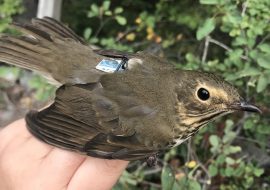
Every spring, nature enthusiasts are excited for another bird migration made evident by the countless posts on social media noting rare warblers spotted in backyards and high species counts on birding trips. And the excitement is warranted, as migration is an amazing feat, both ubiquitous and complex, requiring coordination of numerous adaptations for the birds […]
What happens when hunting history, whale culture, genetics, and an international collaboration work towards a common goal?
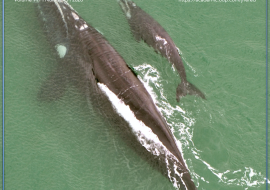
Right whales were given their name because they were the rightwhales to hunt: they swim slowly near the ocean’s surface and make predictable annual migrations to easily accessible bays along the coast. They were hunted to near extinction before international protections were enacted in 1935. As the species recovered, researchers have acquired a myriad of […]
Surviving cyanide – one path or many?
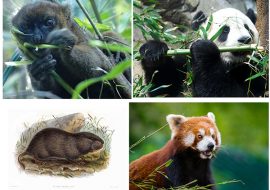
Cyanide is deadly – to most things. In high enough doses it blocks the body’s ability to create energy by interrupting cellular respiration. But even at non-lethal doses it has knock-on effects throughout the body. Despite this, a few mammals eat it regularly. In my last post, I described how I found multiple ways in […]
Surviving Cyanide – Part One
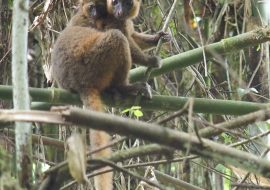
Eating is dangerous. Are you drinking a glass of wine? Perhaps planning pesto for dinner? The very flavors that attract us to those foods come from toxins plants produce to protect themselves. We humans know to the deadly ones. But imagine you’re a wild herbivore – every bite you take is a risk. Bamboos, and […]
Bioenergetic costs of asexuality – does the mitochondrion play a role in maintaining sex?
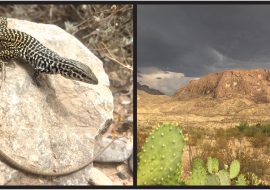
Among vertebrate animals, sexual reproduction is ubiquitous. But why? Asexual populations should outcompete their sexual neighbors (Maynard Smith, 1958).